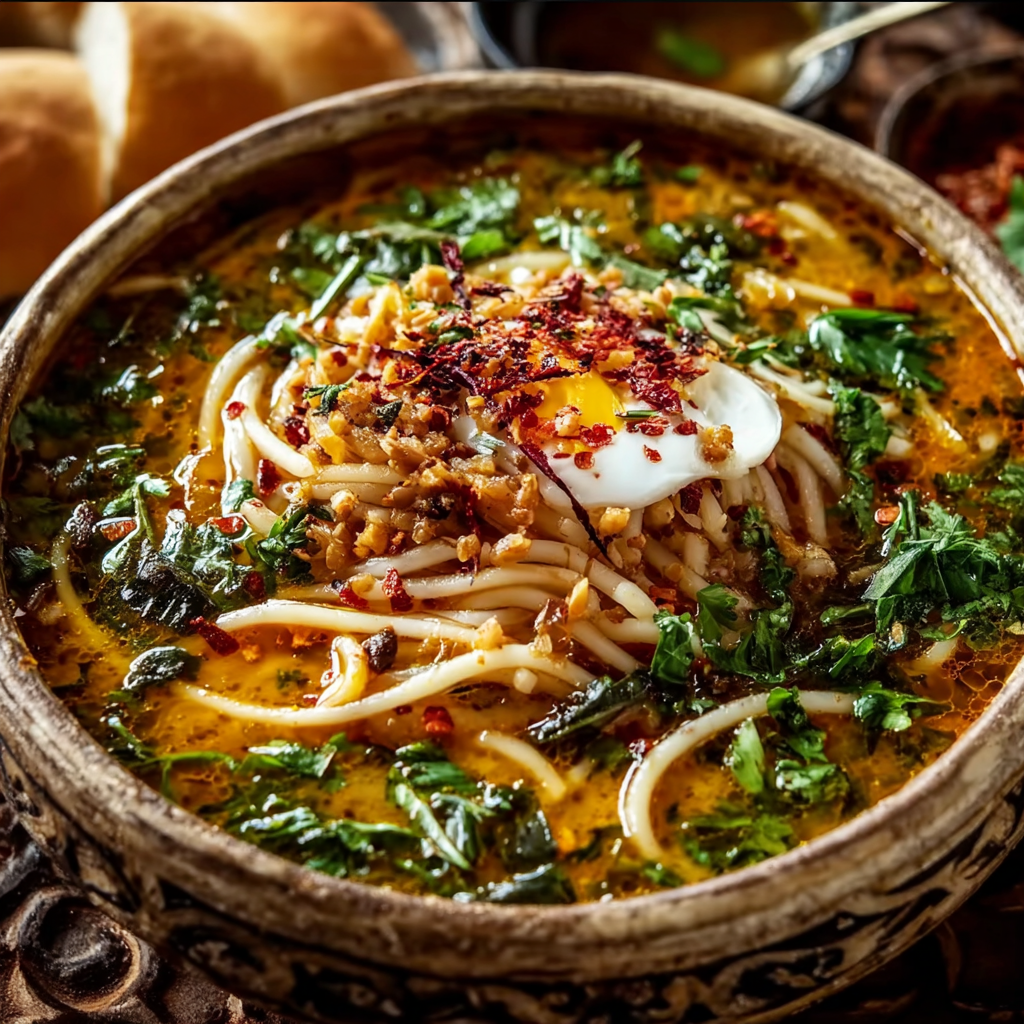
Discover the Magic of Ash Reshteh: A Warming Persian Noodle Soup
Hey there! If you’re anything like me, you appreciate a bowl of soup that feels like a warm hug on a chilly day. Well, today I want to share with you one of my all-time favorite dishes: Ash Reshteh — a traditional Persian noodle soup loaded with legumes, fresh herbs, and comforting flavors. I fell in love with this recipe because it’s both hearty and healthy, filled with vibrant greens and spices that make every spoonful exciting. Plus, it’s vegetarian-friendly, which is always a win in my book!
Nutritional Benefits of Ash Reshteh
This soup is a nutritional powerhouse! Packed with chickpeas, lentils, and kidney beans, it’s rich in plant-based protein and fiber, which keep you full and satisfied. The fresh parsley, cilantro, and spinach not only add vibrant color and flavor but they are also loaded with vitamins A, C, and K, as well as antioxidants. If you add kashk or yogurt, you bring in probiotics that support gut health. All in all, it’s a dish that’s great for your body and tastes amazing!
Fun Ways to Adapt Your Ash Reshteh
- Gluten-Free Version: Use gluten-free noodles or spaghetti to keep the soup safe for those with gluten sensitivities.
- Vegan Variation: Simply skip the kashk or yogurt topping, or swap it for coconut yogurt or a drizzle of tahini for creaminess.
- Spice it Up: If you love a bit of heat, add extra red chili flakes or a splash of hot sauce when serving.
- More Greens: Try adding kale or chard alongside the spinach for an even heartier green boost.
- Quick Version: Use canned beans instead of dried and reduce cooking time for busy days.
How to Make Ash Reshteh: Step-by-Step
Ingredients You’ll Need
- 1 cup chickpeas (soaked overnight)
- 1/2 cup lentils
- 1/2 cup kidney beans (or red beans), soaked
- 1 large onion, finely chopped (plus extra for frying)
- 3-4 cloves garlic, minced
- 1 cup fresh parsley, finely chopped
- 1 cup fresh cilantro, finely chopped
- 2 cups fresh spinach, washed and chopped
- 1-2 teaspoons dried fenugreek leaves (optional)
- 200g Ash Reshteh noodles (or thick noodles/spaghetti broken into pieces)
- 4 tablespoons vegetable oil or olive oil
- 1 teaspoon turmeric powder
- 1 teaspoon dried mint
- Salt and black pepper to taste
- 4-5 cups water or vegetable broth
- 1/4 cup kashk (fermented whey) or plain yogurt (optional but traditional)
- Red chili flakes or ground red pepper (for garnish)
Step-By-Step Cooking Instructions
- Start by rinsing your soaked chickpeas, lentils, and kidney beans. In a large pot, combine these with 4-5 cups of water or vegetable broth. Bring to a boil, then lower the heat and let it simmer gently until the legumes are soft — this usually takes about 1 to 1.5 hours.
- While your legumes cook, heat 2 tablespoons of oil in a pan over medium heat. Add the finely chopped onion and sauté until golden and fragrant. Once golden, remove half of these onions and set them aside for garnishing later.
- To the onions still in the pan, add minced garlic, turmeric, and dried fenugreek (if you’re using it). Cook together for about a minute until you get that wonderful earthy aroma.
- Now stir in the chopped parsley, cilantro, and spinach. Cook the herbs gently for 3–4 minutes, making sure they soften but stay bright green and fresh.
- Pour this fragrant herb and onion mixture into your pot of cooked legumes. Stir everything well and season with salt and black pepper according to your taste. Let the soup simmer for 20 to 30 minutes to let those flavors mingle.
- Next, add your noodles to the pot. Cook until the noodles become tender — usually 8 to 12 minutes. Stir occasionally to stop sticking.
- While the noodles are cooking, it’s time to prepare the magical dried mint oil. Heat 2 tablespoons of oil in a small pan and add dried mint. Fry briefly until aromatic but watch that it doesn’t burn! Set aside this lovely fragrant oil.
- If you have some kashk, gently add it a few minutes before finishing cooking. It adds a lovely tangy creaminess that’s traditional and delicious. If not, no worries — the soup is amazing without it, too.
- To serve, ladle the soup into bowls and generously drizzle the dried mint oil on top. Add the reserved fried onions and sprinkle some fresh chopped herbs. Finish with a pinch of red chili flakes or ground red pepper for a little spicy kick. Serve it alongside Persian flatbread or enjoy it all on its own as a wholesome meal!
Helpful Tips for the Best Ash Reshteh
- Because the legumes take time to cook, soaking them overnight is a game-changer to speed the process and make them easier to digest.
- If you’re in a hurry, canned beans work too — just reduce cooking time and add them after the soup simmers.
- The dried fenugreek leaves add a unique flavor, but if you can’t find them, dried mint alone gives the soup a lovely herbal fragrance.
- When cooking noodles, stir often to prevent them from sticking together at the bottom.
- Store leftovers in an airtight container in the fridge for up to 3 days. The flavors deepen overnight, making it even better the next day.
Essential Equipment
Here’s what you’ll want handy in your kitchen before starting:
- Large cooking pot (big enough to hold legumes and soup comfortably)
- Large frying pan for sautéing onions and herbs
- Wooden spoon or spatula for stirring
- Measuring cups and spoons
- Chopping board and knife
- Colander for rinsing legumes and vegetables
Frequently Asked Questions About Ash Reshteh
- Can I use canned beans instead of soaking dry ones?
Yes! Canned beans save time. Just rinse them well and add later in the cooking process, reducing simmer time accordingly. - What can I substitute if I can’t find Ash Reshteh noodles?
Use thick spaghetti broken into pieces or any wide noodle that holds up well in soup. - Is Ash Reshteh traditionally vegetarian?
Yes, it’s typically vegetarian, relying on a variety of beans, herbs, and sometimes topped with kashk or yogurt for richness. - How spicy is this soup?
It’s gentle by default, but you can easily add chili flakes or hot sauce to taste if you like some heat. - Can Ash Reshteh be frozen?
It can be frozen but the texture of noodles may change slightly. If freezing, consider storing noodles separately or adding fresh when reheating.
Let’s Share the Love for Ash Reshteh!
So, are you ready to try this comforting Persian noodle soup? It’s one of those dishes that brings people together and fills the kitchen with amazing aromas. If you give it a go, I’d love to hear your thoughts and see your pictures! Don’t forget to save this recipe and follow me on Pinterest for more cozy, delicious meals. Happy cooking and enjoy every bite!