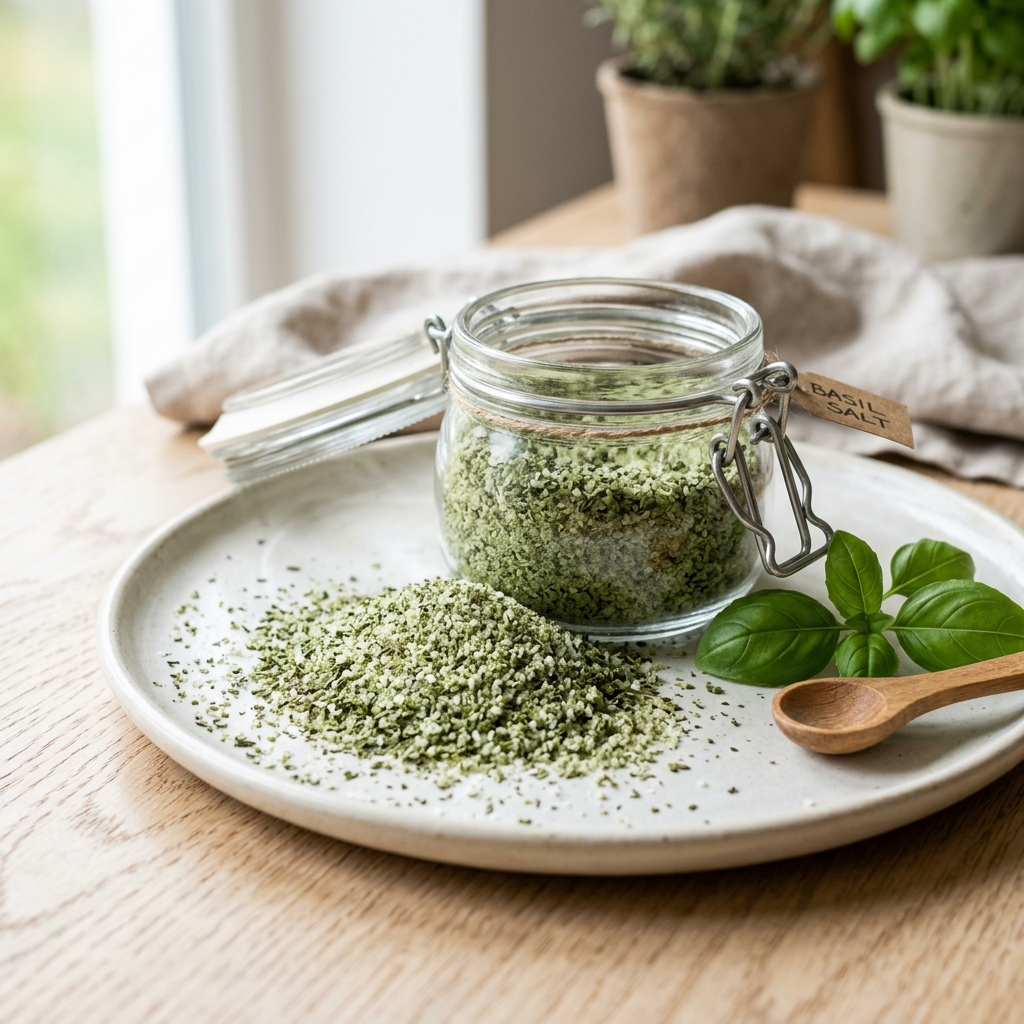
If you’ve never made a basil salt recipe at home, you’re in for such a treat. It’s one of those tiny kitchen projects that feels almost too simple, but the result is incredibly useful and full of flavor. Fresh basil gets blended with salt and gently dried until it becomes a fragrant, finely textured seasoning you can keep on hand for everyday cooking.
I love recipes like this because they help you stretch a bunch of basil beyond the usual pasta night. Instead of worrying that those beautiful leaves will wilt before you use them, you can turn them into something bright, savory, and practical. The finished basil salt has a fresh green color, a clean herbal aroma, and that lovely balance of grassy basil and crisp salt in every pinch.
You can use it to wake up sliced tomatoes, finish scrambled eggs, season roasted vegetables, or add a little extra personality to chicken, fish, or even buttered toast. Once you make a jar, I think you’ll start reaching for it constantly. It also makes a sweet little homemade gift if you pour it into a small glass jar.
Quick Recipe Info
| Prep time | 10 minutes |
| Cook time | 60 minutes |
| Total time | 70 minutes |
| Servings | 16 servings |
| Difficulty | Easy |
Why You’ll Love It
- A smart way to preserve fresh basil before it goes limp in the fridge.
- Made with just a few basic ingredients and minimal effort.
- Beautiful green color and a fresh, savory herb aroma.
- Easy to sprinkle over eggs, tomatoes, roasted potatoes, pasta, and grilled meats.
- Keeps well, so you can make a small batch and use it over time.
- Lovely for gifting in a small jar if you enjoy homemade kitchen treats.
Nutritional Benefits and Adaptable Variations
A simple flavor booster
Basil adds a fresh herbal note without needing extra rich ingredients, so this seasoning can be a nice way to add flavor to everyday meals. While the basil itself contributes a small amount of plant compounds and natural aroma, this recipe is still a salt-based condiment, so I like to think of it as a finishing touch rather than a heavy seasoning. A little goes a long way.
Easy ways to change it up
You can keep this basil salt recipe classic, or make a few small adjustments depending on how you plan to use it. Try adding a tiny bit of garlic powder for a more savory blend, lemon zest for brightness, or a few parsley leaves for a softer herbal profile. If you prefer a chunkier finish, pulse it less. If you want a finer seasoning for sprinkling, grind it more thoroughly after drying.
Ingredients
[INSERT INGREDIENT IMAGE HERE]
For the basil salt
- 2 cups fresh basil leaves, lightly packed
- 1/2 cup coarse kosher salt
- 1 teaspoon flaky sea salt or fine sea salt, optional, for balancing texture
Step-by-Step Instructions
- Wash the basil leaves if needed, then dry them very well. I usually spread them on a clean kitchen towel and pat gently until no surface moisture remains. Dry basil is important here so the mixture dehydrates evenly.
- Add the basil leaves and kosher salt to a food processor. Pulse until the basil is finely chopped and the salt turns a vivid green. Stop and scrape down the sides if needed so everything blends evenly.
- Spread the basil salt mixture in a thin, even layer on a parchment-lined baking sheet or small baking dish. If you’re using the extra sea salt for texture, stir it in now or sprinkle it over the top before drying.
- Dry the mixture in a low oven at 170°F to 200°F for about 45 to 60 minutes, stirring once or twice, until it feels dry and crumbly. You want the basil to lose its moisture without browning.
- Let the mixture cool completely. If you’d like a finer texture, pulse it once more in the food processor or crush it with your fingers until the salt is uniform and easy to sprinkle.
- Transfer the finished basil salt to a clean, dry jar with a tight-fitting lid. Use it as a finishing salt on vegetables, eggs, pasta, tomatoes, chicken, or fresh bread with butter.
Tips, Serving Suggestions & Substitutions
Tips
The most important tip is to dry the basil thoroughly before blending and to dry the mixture gently, not aggressively. Too much moisture shortens shelf life, and too much heat can dull both the color and flavor.
Check the salt near the end of drying time by rubbing a pinch between your fingers. If it still feels soft or damp, give it a little more time in the oven. Letting it cool completely before jarring also helps prevent trapped moisture.
Serving Suggestions
Try this basil salt on sliced tomatoes, cucumber salad, avocado toast, fried or scrambled eggs, roasted zucchini, grilled corn, chicken breasts, or simple buttered pasta. I also love mixing a pinch into softened butter for an easy herb butter that tastes lovely on bread or steamed potatoes.
Substitutions
If you don’t have kosher salt, coarse sea salt works well too. Fine salt can be used, but the final texture will be denser and a bit more intense, so use a lighter hand when seasoning. You can also blend in a small amount of parsley or mint with the basil, though the classic all-basil version gives the cleanest flavor.
Nutrition Information
| Calories | 1 | Carbohydrates | 0.2 g |
| Protein | 0.1 g | Fat | 0 g |
| Saturated fat | 0 g | Cholesterol | 0 mg |
| Sodium | 430 mg | Fiber | 0.1 g |
| Sugar | 0 g | Serving size | About 1 teaspoon |
Nutrition values are approximate estimates and can vary based on the salt used and the exact size of your basil leaves.
Storage & Make-Ahead Tips
Storage: Keep the basil salt in a clean, airtight jar in a cool, dry place away from direct sunlight and steam. If it has dried fully, it should keep its best flavor for about 2 to 4 weeks at room temperature.
Make-ahead: This is a great little prep recipe to make when basil is abundant. You can double the batch as long as you dry it thoroughly and divide it into small jars.
Food safety note: Because fresh herbs contain moisture, make sure the mixture is completely dry before storing. If you notice clumping, condensation, or any off smell, it’s best to discard it and make a fresh batch.
FAQ
Can I make basil salt without an oven?
You can, as long as you have a very dry environment and enough time for air-drying, but the oven method is more reliable and faster. A dehydrator on a low setting also works very well.
Why did my basil salt turn dull or brown?
That usually happens when the oven temperature is too high or the basil dries for too long. Low, gentle heat helps preserve the fresher green color and the more delicate basil aroma.
Can I use dried basil instead of fresh basil?
You can, but the result will be different. Fresh basil gives this recipe its vivid green color and brighter flavor. Dried basil can be stirred into salt, but it won’t have the same fresh, homemade character.
What kind of salt works best?
Kosher salt is my favorite because it pulses well with the basil and creates a nice texture. Coarse sea salt is also a good option. Fine table salt tends to be more intense and less texturally interesting.
How do I use basil salt in everyday cooking?
Use it like a finishing salt anywhere you want a fresh herb note. It’s especially good on tomatoes, eggs, potatoes, roasted vegetables, pasta, grilled chicken, and buttered bread.
Final Thoughts
This basil salt recipe is such a lovely way to capture the flavor of fresh basil in a form you’ll actually use all week. It’s simple, practical, and surprisingly special for something made with only a couple of ingredients. If you try it, I’d love to hear how you used it. Feel free to leave a comment, share the recipe with a friend, and save it to Pinterest for later.
Basil Salt Recipe
Equipment
- 1 food processor small or standard size
- 1 baking sheet or small baking dish
- 1 parchment paper for easy drying and cleanup
- 1 airtight jar for storage
Ingredients
For the basil salt
- 2 cups fresh basil leaves lightly packed
- 1/2 cup coarse kosher salt
- 1 teaspoon flaky sea salt or fine sea salt optional, for texture balance
Instructions
Prepare the basil salt
- Wash the basil leaves if needed and dry them very well with a clean towel.
- Add the basil leaves and kosher salt to a food processor and pulse until the basil is finely chopped and the salt is evenly green.
- Spread the mixture in a thin layer on a parchment-lined baking sheet or small baking dish.
- If using the optional sea salt, stir it into the mixture before drying.
- Dry in a low oven at 170°F to 200°F for 45 to 60 minutes, stirring once or twice, until fully dry and crumbly but not browned.
- Cool completely, then pulse again briefly for a finer texture if desired.
- Transfer to a clean, dry airtight jar and use as a finishing salt.